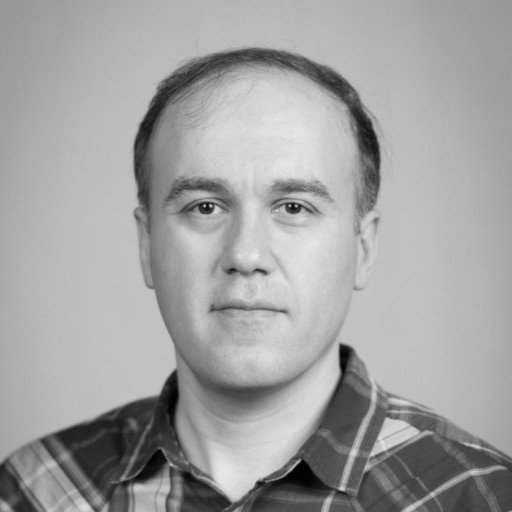
About me
I am employed as a scientist in astronomy at the Universities Space Research Association (USRA)'s Science and Technology Institute (STI) in Huntsville, Alabama. I held the positions of research scientist at Eureka Scientific, with financial backing from NASA (2022–2025), research fellow at the University of Michigan (2019–2021), and postdoctoral fellow at the Harvard/Smithsonian Center for Astrophysics (2015–2018). I obtained a Ph.D. in Physics and Astronomy from Macquarie University in 2014. Prior to that, I earned an M.Sc. in Plasma Physics from Queen's University Belfast in 2009. I completed my studies in electrical engineering and computational science at the University of Rostock, Germany, where I earned a M.Sc. in Computational Engineering, specializing in Electrical Engineering, in 2007. I worked as an early-stage researcher at the University of Craiova in 2008, where I carried out theoretical physics research with funding from the Marie Curie Research Training Network. Prior to 2005, I worked as a software and hardware developer at private limited firms, specializing in automation, microcontroller programming, programmable logic devices, embedded systems, and numerical control, and later remotely as a part-time software developer for a cybersecurity firm until 2006.
Bio
Education
- Ph.D. Physics & Astronomy, Macquarie University, Australia, 2014
- M.Sc. Plasma Physics, Queen's University of Belfast, United Kingdom, 2009
- M.Sc. Computational/Electrical Eng., Universität Rostock, Germany 2007
Professional Experience
- Space Scientist, USRA/STI, Huntsville, AL, USA (2025 - present)
- Research Scientist, Eureka Scientific, CA, USA (2022 - 2025)
- Research Fellow, University of Michigan, MI, USA (2019 - 2021)
- Postdoc Fellow, Harvard-Smithsonian CfA, MA, USA (2015 - 2018)
Other Experience
- Teaching Assistant, Holographic Duality, MIT Physics, USA (2018)
- Teaching Assistant, Physics Lab., Macquarie U., Australia (2011 - 2012)
- Visiting Researcher in Physics, University of Craiova, Romania (2008)
Awarded Funds
- NASA NICER Program (80NSSC23K1098)
- NASA Astrophysics Data Analysis Program (80NSSC22K0626)
- International Astronomical Union Travel Grant (€5.7k; 2011, 2014,2022)
- Marie Curie Alumni Association Micro-grant (€400)
- Sigma Xi Grants-in-Aid of Research ($1.5k; 2013)
Awarded Scholarships
- Macquarie University Research Excellence Scholarship (2010-2013)
- NI/UK Department for Employment and Learning Studentship (2009)
- Marie Curie Early-Stage Researcher Scholarship (2008)
Memberships
- International Astronomical Union (IAU)
- American Astronomical Society (AAS)
- American Physical Society (APS)
- Sigma Xi, The Scientific Research Honor Society (ΣΞ)
Publication
X-ray Data Analysis of Active Galactic Nuclei
I investigated the presence and properties of an ultra-fast outflow (UFO) in quasars using high-resolution X-ray spectra. Analysis of the spectra reveals complex absorption lines from highly ionized elements like neon, magnesium, and silicon, indicating the presence of UFOs moving at a nearly relativistic speed. Such UFOs are characterized by their ionization parameter and column density. Interestingly, my study of PG 1211+143 also demonstrated consistency between the X-ray absorption features and a broad Lyα absorption line observed in UV data, providing the first-ever simultaneous detection of a UFO in both X-ray and UV bands. My findings suggest a potential link between the X-ray and UV outflows, possibly driven by an active jet in the quasar. In my research, I employed data from multiple X-ray telescopes like Chandra, NuSTAR, and XMM-Newton, which delves into the presence of mildly-relativistic UFOs, meaning material moving at speeds near to the speed of light. Analysis of the X-ray spectra of several quasars reveals blueshifted absorption lines, indicating outward gas flow.
IFU Spectroscopy of Ionized Nebulae
My works on ionized nebulae focuses on two key aspects: physical and chemical properties, and morpho-kinematic properties. To derive the temperature and density of ionized nebulae, I analyzed the nebular emission lines resolved by an integral field unit (IFU) spectrograph. I also conducted an abundance analysis, which revealed discrepancies between the abundances derived from different methods. My findings suggest the presence of small, dense clumps of cool, oxygen-rich material within the warm diffuse nebulae. This could challenge our understanding of how ionized nebulae evolve. Using IFU observations, I constructed 3D models of the nebulae, providing a more complete picture of their shapes and gas flows. My research helped to elucidate how these nebulae evolve, resulting in the morphologies we observe now. My research on ionized nebulae improves our understanding of gaseous nebulae, sheds light on their physical and chemical makeup and morphological shapes, and helps us piece together the puzzle of how these objects form and evolve.
Teaching
Teaching Experience
- Educator, TED-Ed Lesson: Fermi Bubbles, 2023
- NCCN Subject Matter Expert, SETI Institute, 2022-present
- Mentor, Undergraduate Research Opportunity Program, UMich, 2019-2020
- Teaching Assistant, Macquarie University (Astronomy courses), 2010-2012
Teaching Certificate
- Higher Education Teaching Certificate, Harvard University, 2021
- College STEM Teaching Certificate, University of Michigan, 2020